Observability in Sustainability
Sustainable buildings promise efficiency but without measurement, promises go unverified. Explore how observability bridges design intent and operational reality on India's path to net-zero.
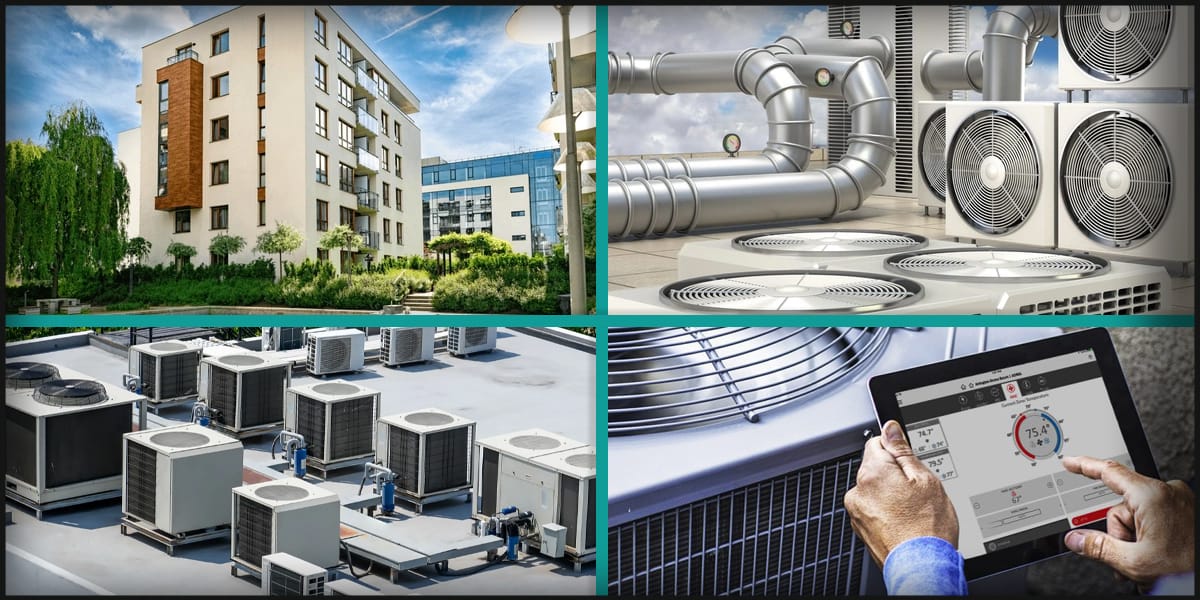
A sustainable building is designed to be efficient, resource conscious, and environmentally responsible throughout its life cycle.
However, it can be hard to quantify its efficiency in real terms once the building starts seeing regular use. Additionally, over time, gaps between design intent and operational efficiency may also become evident. These can be hard to identify, let alone address, unless a comprehensive system that measures certain key metrics is put in place. This approach is often referred to as observability.
Observability requires understanding the complex systems under evaluation, like buildings, supply chains, or electricity distribution networks. It further requires identifying the metrics that can act as signals for the system as a whole, and then sustained measurement of these metrics over a long span of time. Measurement, though critical, is only the first step.True observability uncovers the why behind performance patterns. It allows us not only to identify emerging issues well in time, but also helps in testing various strategies. Utilised properly, it leads to highly optimised operations, reduced wastage of resources, and substantial savings in terms of resources and finances.
Risk Mitigation through Observability
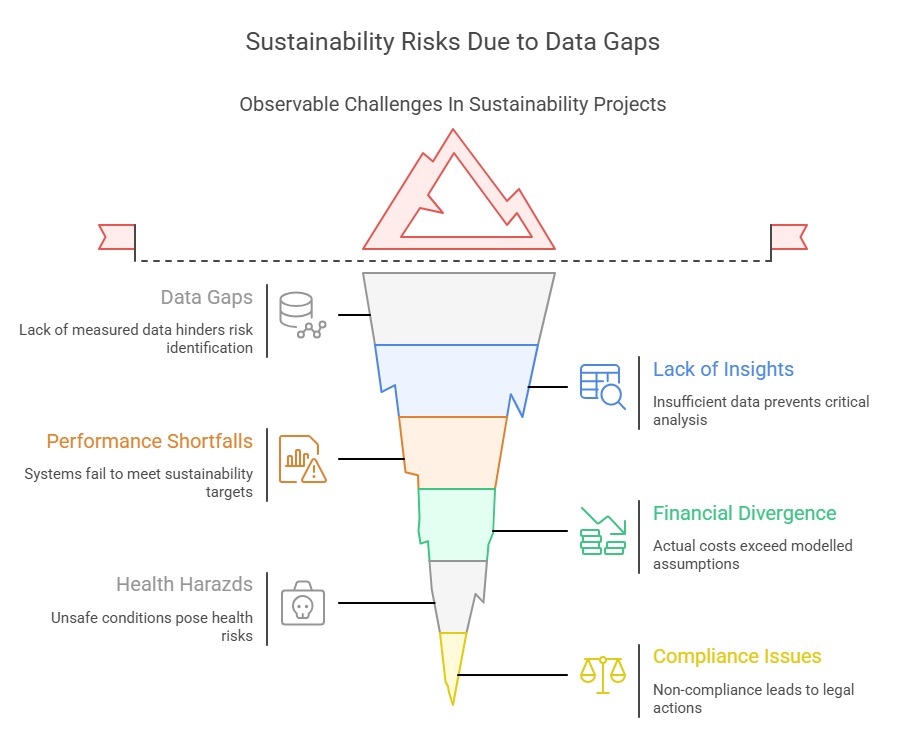
The risks prevalent in the sustainability domain are largely due to gaps in the measured data, as well as a lack of critical insights based upon sufficiently well measured, near real-time data. Noticing risks early, and identifying strategies to address these is crucial for the health of any complex system. This has made implementing observability and risk mitigation a priority for the regulators, financiers, and other stakeholders active in sustainability. In this context, let’s look at some of the main risks involved in typical sustainability projects.
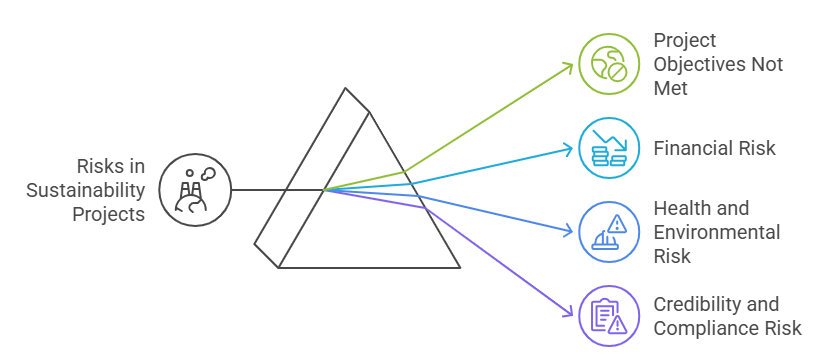
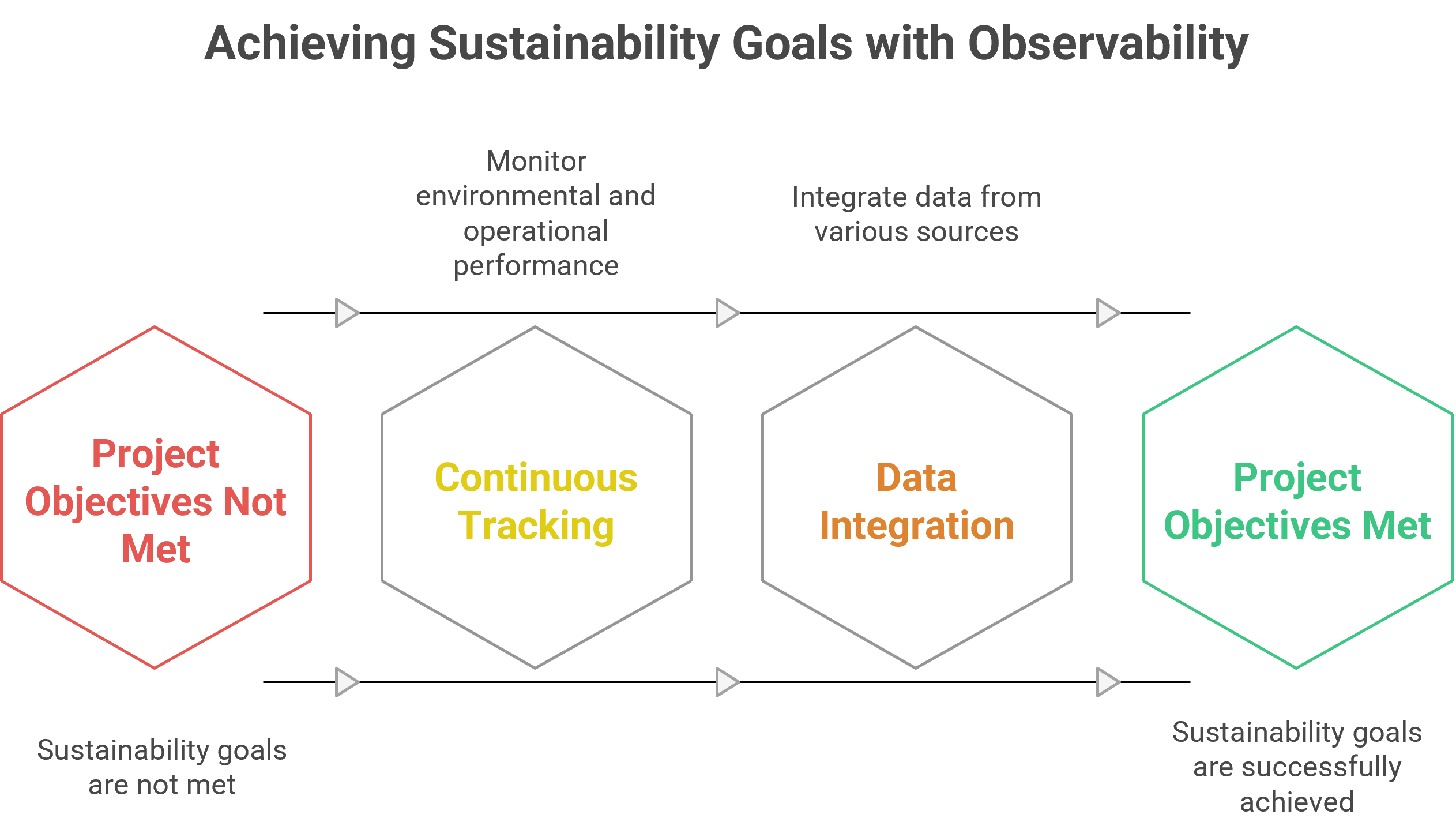
1. Project Objectives Not Met
Sustainability initiatives are set up with clear performance goals or benchmarks for targets such as saving energy, improving water efficiency, or reducing carbon emissions.
Performance risk arises when systems are not able to meet these targets due to various reasons like changes in expected usage patterns, ageing equipment, climate stress, or execution challenges.
Data monitoring and integration systems enable continuous tracking of environmental and operational performance which can help ensure that the mandated objectives can be met. As an example, tools like OCEMS and CAAQMS are now considered mandatory by CPCB, the Indian pollution control board. Similar systems are increasingly becoming standard across the industry.
2. Financial Risk
Financial risk arises when actual resource consumption, equipment efficiency, or process outcomes diverge from design plans and modelled assumptions, which ends up eroding expected returns on sustainability investments.
Integrating a well designed observability strategy can identify cost-driving patterns across utilities, treatment systems, and supply chains, enabling timely correction across multiple areas. It also supports better budgeting to further reduce operational costs and unplanned maintenance.
Resource and energy efficiency is one of the key components of a sustainable building or similar system, which means that any shortfall here has an outsized impact across all sustainability markers.
3. Health and Environmental Risk
Sustainability projects often involve important areas like building operations, air quality management, water treatment, and waste systems.
Any risk in these can lead to substantial health and environmental risks, for example if indoor pollutant levels exceed safe thresholds or systems operate beyond design limits. Possible repercussions on human health may include respiratory or other health issues, as well as concerns relating to fire safety, hazardous materials etc. In addition it may also lead to regulatory and legal actions against the responsible organisation.
Continuous and careful monitoring enables rapid detection of unsafe conditions, reducing the likelihood of incidents.
4. Credibility and Compliance Risk
The Environment Audit Rules, 2025 have recently been formulated and passed by the Indian government. These have much tighter regulatory requirements, including mandatory third-party audits, and expect proper observability systems in place for the same.
In such a scenario, reliance on manual reporting or fragmented data significantly increases compliance and credibility risk.
Sustainable Buildings & Observability
By transitioning from simple monitoring to near-real-time data insights, organisations can turn their infrastructure, processes, or products into drivers of sustainability, reducing their carbon footprint while improving operational efficiency. India's building sector accounts for 36% of total energy consumption and is central to the country's 2070 net-zero commitment.
India is transitioning from traditional energy management to smart, grid-connected building systems at different adoption stages.
1. BEMS (Building Energy Management Systems)
BEMS optimises building energy use for HVAC, lighting, and solar systems. Widely adopted in green buildings; standard for IGBC and LEED ratings.
As an example, Indira Paryavaran Bhawan, New Delhi (GRIHA 5-Star + LEED Platinum) uses BEMS with chilled beam air conditioning and a 930 kWp solar system, achieving 40% energy savings and 67.3% lower energy consumption than the GRIHA benchmark. [1]
2. Smart Grid Integration
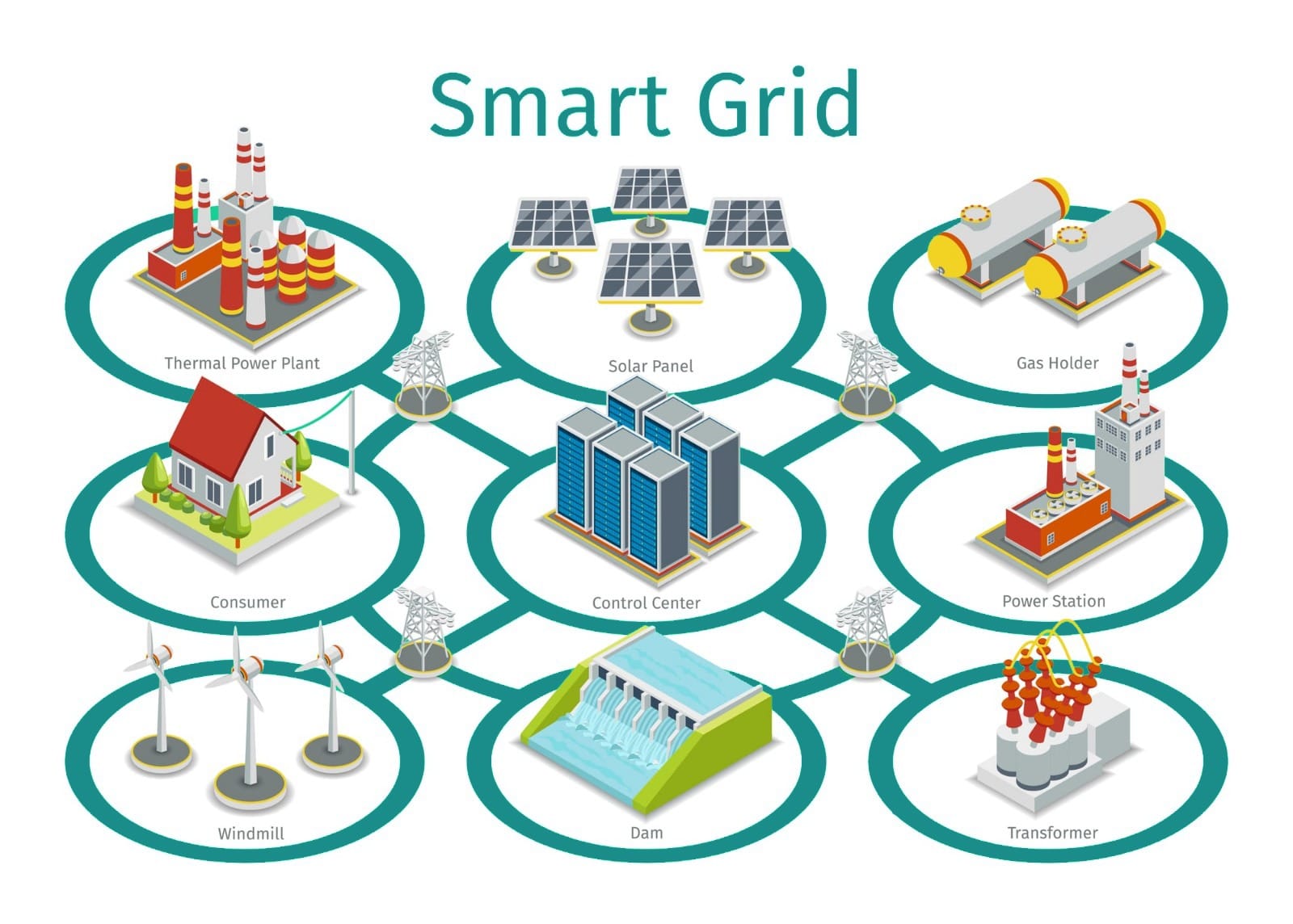
Smart grid integration enables two-way communication between buildings and the power grid, enabling dynamic load balancing, renewable integration, and real-time demand response, along with provision for supplying the grid with excess renewable energy generated by the building complex. It is an emerging area of technology, currently limited to advanced commercial and smart city projects.
As an example, Smart Grid Naroda Pilot Project, Gujarat (UGVCL) demonstrates advanced grid integration with renewable energy sources (solar and wind), smart meters, and peak load management, operating as one of eight national pilot projects under NSGM. [2]
3. IoT-based Energy Systems
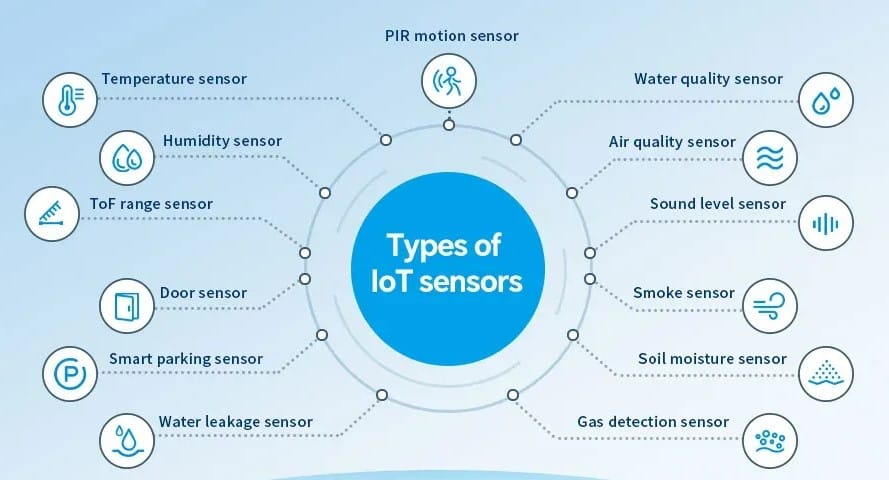
IoT-based energy systems use sensors for real-time energy monitoring and control. Growing adoption in smart cities.
As an example, Infosys campuses deploy Command Centres with real-time IoT-based monitoring and AI intelligence systems, achieving a 55% reduction in per capita electricity consumption since 2008, with cumulative energy savings of $225 million. [3][4]
4. Smart Meters
Smart meters digitally measures real-time energy use and transmits consumption data to support two-way grid communication. Expanding under NSGM and BEE initiatives.
As of March 2025, 25 million smart consumer meters installed out of 222.45 million sanctioned under the Revamped Distribution Sector Scheme (RDSS). Delhi achieved 100% consumer smart meter deployment, while states like Bihar, Andhra Pradesh, and Chhattisgarh show promising progress. [5][6]
5. Grid-Interactive Efficient Buildings (GEBs)
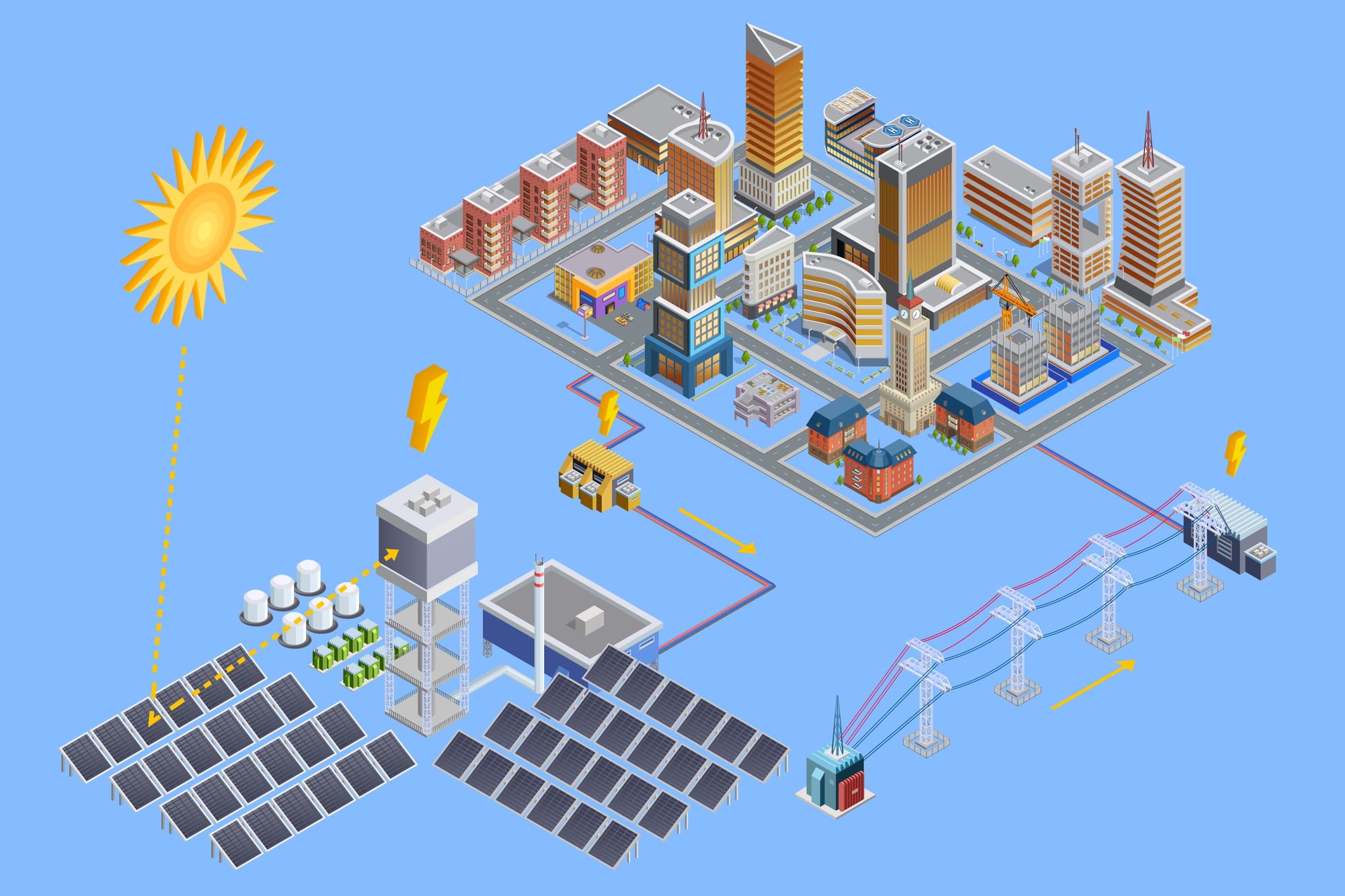
GEBs automatically adjust building loads based on real-time grid signals and conditions. Its implementation is in the early stages, mainly pilot projects.
As an example, Under NSGM, 12 smart grid pilot projects (worth Rs 2.47 billion) have been completed, demonstrating GEB functionalities including load management, outage management systems, and renewable integration with approximately 160,000 smart meters installed. [7]
6. Demand Response Systems (DRS)
DRS uses automated controls to shift or curtail a building's electricity loads during peak demand periods. Its implementation is growing, but it's limited to large buildings as of now.
As an example, Tata Power Mumbai launched an AI-centric Demand Response Management Programme targeting 6,000 large commercial and industrial customers. It aims to achieve 75 MW peak capacity reduction in the first six months, with a goal to scale up the capacity reduction to 200 MW. [8]
7. Renewable Energy Management Systems
Renewable Energy Management Systems track and optimise on-site solar and wind generation through dedicated monitoring software to manage energy use. They are common in green buildings, but its current benefits cannot be fully realised due to limited grid integration.
As an example, ITC Grand Chola, Chennai (world's largest LEED Platinum hotel + LEED Zero Carbon certified) meets its entire electrical energy demand through self-owned wind farms and solar energy, with 35% water use reduction through comprehensive monitoring systems. [9][10]
Observability & Efficient Fans
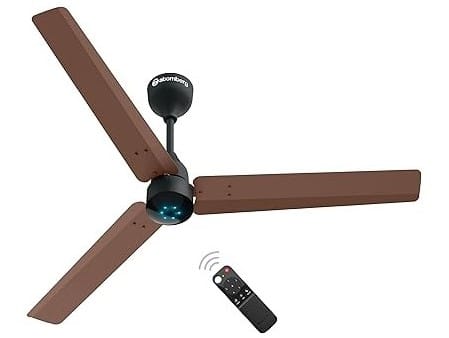
Our Phase 1 research on the Technology Roadmap for Ceiling Fans, conducted in association with the Natural Resources Defense Council (NRDC), revealed that ceiling fans account for nearly 30% of household energy consumption in India, yet 90% of households still rely on inefficient conventional fans [11]. The transition to BLDC technology must be tracked, verified, and acted upon through four core metrics:
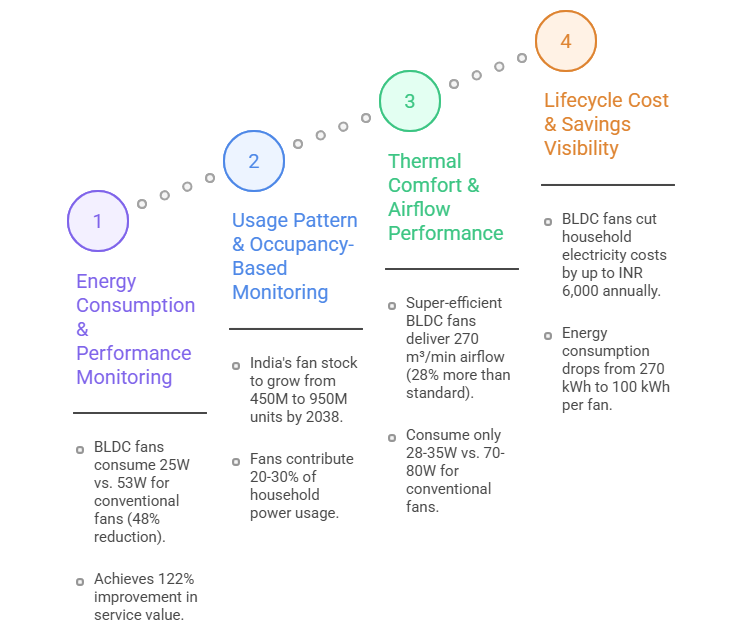
- Energy Consumption & Performance Monitoring validates real savings in real time. A BLDC fan consumes just 25 W compared to 53 W for a conventional induction fan, a 48% reduction delivering a 122% improvement in service value [11]. At scale, this translates to 35.9 billion units of electricity saved and 29 million tonnes of CO₂ reduced by 2030 [11]. Smart meters and RPM tracking make these savings auditable and not just predicted.
- Usage Pattern & Occupancy-Based Monitoring eliminates hidden waste. With India's fan stock set to grow from 450 million to 950 million units by 2038 [11], and fans contributing 20–30% of household power usage [14], occupancy sensors and smart timers ensure fans only run when needed, converting behavioural data into measurable load reduction.
- Thermal Comfort & Airflow Performance confirms efficiency does not compromise comfort. Super-efficient BLDC fans deliver 270 m³/min of airflow, which is 28% more than standard fans. Consuming only 28–35 W versus 70–80 W for conventional fans [13]. Sensors verify that comfort and efficiency targets are met simultaneously.
- Lifecycle Cost & Savings Visibility makes the ROI undeniable. BLDC fans cut household electricity costs by up to INR 6,000 annually, with energy consumption dropping from 270 kWh to just 100 kWh per fan [11]. With a payback period of 1.5–2 years, a lifespan of 8–10 years[13], and CO₂ savings of 30–40 kg per fan annually, projected cumulative savings reach 217.07 TWh over 25 years [11]. Energy dashboards make this value visible, auditable, and scalable.
Without observability, these gains remain invisible. With it, they become the foundation for India's data-driven energy future.
Challenges to Widespread Adoption
While the energy and financial benefits of smart developments like HPCL Township and BLDC Fan Technology are well established, four key challenges must be overcome to achieve scale.
- High Initial Costs remain the biggest barrier. The upfront investment in smart grid infrastructure and BLDC fans deters adoption, particularly for smaller enterprises and price-sensitive households. Subsidies and financing mechanisms are critical to closing this gap.
- Interoperability Issues slow integration. Smart meters, occupancy sensors, and grid systems often run on incompatible protocols, making seamless deployment across diverse building types difficult and costly.
- Cybersecurity & Data Privacy risks rise with connectivity. As systems collect real-time energy and occupancy data, robust data governance must be built in from the start not added later.
- Lack of Skilled Personnel limits execution, particularly for proper BEMS and HVAC integration in green buildings (e.g., LEED/GRIHA-certified envelopes and net-zero systems). Similarly, scaling to India's projected 950 million fan stock by 2038 [14] demands professionals trained for rapid installation, monitoring, and maintenance.
Resolving these challenges through targeted policy, standardisation, and workforce investment is not optional it is the critical path to turning energy efficiency potential into verified, lasting impact.
REFERENCES
[1] International Journal of Scientific & Technology Research. (November 2020). Case Study: India's First Net-Zero Energy Building- Indira Paryavaran Bhavan. https://www.ijstr.org/final-print/nov2020/Case-Study-Indias-First-Net-zero-Energy-Building-Indira-Paryavaran-Bhavan.pdf
[2] Eletsonline. (October 3, 2024). Smart Energy Management Redefining India's Future. https://egov.eletsonline.com/2024/10/smart-energy-management-redefining-indias-future/
[3] Infosys. Carbon Neutrality | Environmental - Energy. https://www.infosys.com/about/esg/environmental/energy.html
[4] Infosys Sustainability Practice. Engineering Services - Sustainability Practice. https://www.infosys.com/services/engineering-services/service-offerings/sustainability-practice.html
[5] National Smart Grid Mission. (March 2025). 25M Smart Meters in India. https://www.nsgm.gov.in/en/content/march-2025-25-million-smart-consumer-meters
[6] Power Line Magazine. (February 7, 2025). Smart Metering: Advancements Progress under the NSGM. https://powerline.net.in/2025/02/03/smart-metering-advancements-progress-under-the-nsgm/
[7] Frontiers in Artificial Intelligence. (October 3, 2024). Advancements, Challenges, and Future Prospects of Smart Grid Technology in India. https://www.frontiersin.org/journals/artificial-intelligence/articles/10.3389/frai.2024.1475604/full
[8] Tata Power. (2024). Tata Power Joins Hands with AutoGrid to Expand AI-Enabled Smart Energy Management System in Mumbai. Tata Power News & Media. https://www.tatapower.com/news-and-media/media-releases/tata-power-joins-hands-with-autogrid-to-expand-ai-enabled-smart-energy-management-system-in-mumbai
[9] AECOM. (2018). ITC Grand Chola. https://aecom.com/projects/itc-grand-chola/
[10] ITC Hotels. Responsible Luxury. https://www.itchotels.com/in/en/responsible-luxury
[11] NRDC & GreenTree Global. (2024). Technology Roadmap for Ceiling Fans: A Long-Term Vision on Appliance Energy Efficiency Levels in India. https://drive.google.com/file/d/1Wg0IXdiHHd9YgzJ5HGTMVHJ87GFHp5vQ/view?ref=greentree.global
[12] Nikshanonline. (2025, February). BLDC Fans: The Surprising Future of Energy-Efficient in 2025. https://nikshanonline.com/bldc-fans-the-future-of-energy-efficient-in-2025/
[13] Airzon. (2025). Beyond the Payback Period: The Untold ROI of Replacing Your Industrial Energy Saving Fans. https://www.airzon.in/beyond-the-payback-period-the-untold-roi-of-replacing-your-industrial-energy-saving-fans/
[14] Ministry of Environment, Forest and Climate Change (MoEF&CC), India Cooling Action Plan (ICAP) (New Delhi: Government of India, 2019), https://ozonecell.nic.in/wp-content/uploads/2019/03/INDIA-COOLING-ACTION-PLAN-e-circulation-version080319.pdf.
Authored By - Shreea and Anurag Bajpai


Follow our activities on Twitter | Linkedin | Youtube | Instagram | Facebook